Terpenes Explained: Where Hemp Tea Aroma Comes From
What terpenes are, the five names you will see most often, and why hemp tea smells of lemon, pine or pepper. Part one of three.
Open a bag of hemp tea and the first thing you notice is the smell. Lemon peel, pine needles, black pepper, sweet berry — it changes a lot from one variety to the next. A large part of that scent comes from natural aromatic compounds called terpenes.
This is part one of a three-part series. It covers what terpenes are and the names you will meet most often. The rest of the series covers how to read a terpene panel on a lab report, and why aroma fades over time.
What is a terpene?
Terpenes are small aromatic molecules made by many plants. They are behind the scent of citrus peel, pine needles, lavender and black pepper, and hemp produces them too. In the plant they are involved in defence against pathogens, and they give each variety much of its aroma.
Terpenes are volatile, which means they evaporate easily. That is why you can smell them from a bag without touching the tea, and why aroma changes over time.
They are not the whole story. Researchers have reported around 200 volatile compounds in the plant's aroma, including terpenoids, aldehydes and esters. Terpenes are the best known, but the smell you notice is a blend.
Five names you will see often
These are general descriptions of each compound. They are not measurements of any particular batch of tea.
| Compound | Typical aroma | Also found in |
|---|---|---|
| Limonene | Citrus peel, lemon, orange | Citrus fruit, juniper, mint |
| Myrcene | Earthy, herbal, hop-like | Hops, lemongrass, basil |
| Pinene | Fresh pine needles, resinous | Pine needles, rosemary, parsley |
| Caryophyllene | Black pepper, clove-like spice | Black pepper, cloves |
| Linalool | Floral, lavender, light citrus | Lavender, coriander seed |
Aroma is a blend, not one compound
A lemon note on a product page describes how the batch smells. It does not tell you which compound is responsible, or how much of it is there. Two varieties can both smell of citrus and have different blends underneath. One variety can also smell different from one batch to the next, which our guide to why Calm Leaf hemp tea varieties change explains.
Dry tea and the brewed cup
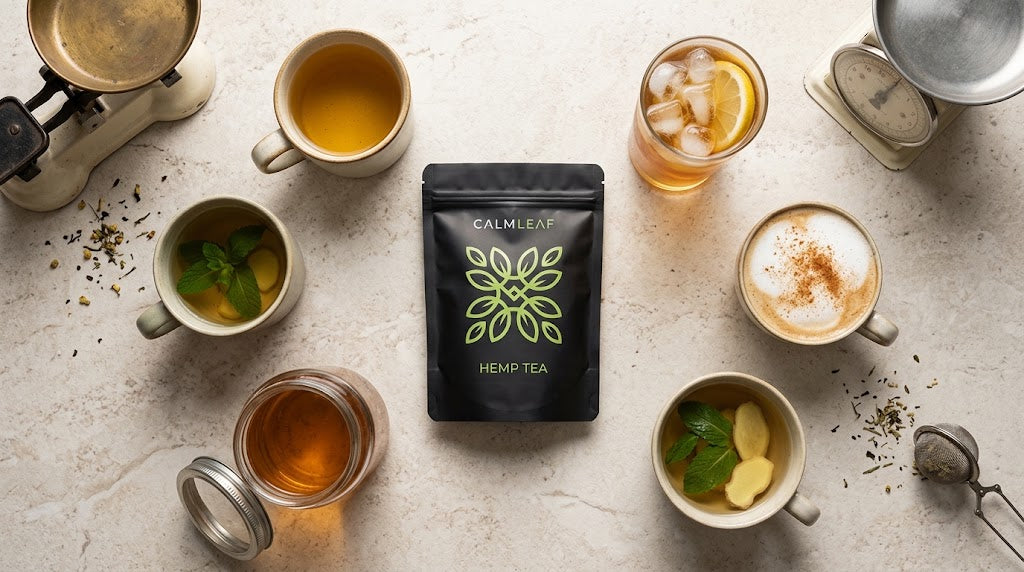
Dry hemp tea usually smells louder than the cup. Once the water goes in, the herbal base sits alongside the variety's own aroma, so the notes on a product page come through more quietly. Our hemp tea flavour guide covers what to expect, and the water temperature guide covers how brewing changes the cup.
How Calm Leaf describes aroma
The aroma and flavour notes on our product pages are written from how each batch smells and tastes. They are tasting notes, not laboratory measurements, and they do not mean anything has been added to the tea. We group the range into five flavour families: citrus and zest, berry and dark fruit, dessert and bakery, chocolate, coffee and earth, and fuel, pine and savoury.
See the current hemp tea range for what is available now.
Frequently asked questions
What are terpenes?
They are aromatic compounds made by plants. They are behind the smell of citrus peel, pine needles, lavender and black pepper.
Does hemp tea contain terpenes?
Hemp plant material naturally contains them. The amount and the mix vary by variety and by batch.
What do terpenes do?
In the plant, they are involved in defence and give each variety much of its aroma and flavour. On Calm Leaf pages, we use them only to describe how a batch smells and tastes.
Are terpenes added to Calm Leaf hemp tea?
The aroma notes on our product pages describe how the batch smells. They do not mean anything has been added to it.
Why does the dry tea smell stronger than the cup?
The dry tea gives off its aroma directly. In the cup, the aroma sits alongside the herbal base of the tea, so the notes come through more quietly.
Shop the range
Independently lab tested hemp tea and solid extracts, plus Calm Leaf merchandise. Free UK delivery over £49.